The Best Airbnb Markets in 2026 (Where to Buy an Airbnb This Year)
Find the best places to buy an Airbnb in 2026 with a review of the top US STR markets, ROI insights, and investor-ready analysis from Ridge Street.
nmin readReleased on:December 26, 2025Last updated on:September 27, 2026


Overview:
- The U.S. short-term rental (STR) market has matured, as more investors are seizing the higher rents that short term rentals can provide. Demand is still growing, but success now requires more disciplined deal evaluation rather than speculation and emotional purchasing.
- Characteristics of profitable Airbnb markets include: high revenue potential, clear regulations, consistent demand, and high cash-on-cash returns.
- Strong STR opportunities exist all across the US, but they are increasingly submarket-specific, not city-wide.
- Investors who evaluate deals conservatively and pair the right financing with the right market, outperform long term rentals.
Intro
Short term rentals (STRs) marketed through popularized channels like Airbnb and VRBO have become a mainstream investment strategy for residential real estate investors since the early 2020s.
As various real estate submarkets have become more saturated with STRs, regulations and competition driven price modulation have made many of the once booming STR markets much more average in many markets.
Succeeding in today's short term rental market means: 1. Understanding what makes an STR profitable, and 2. Where to look to find those “Hidden Gems”.
As a lender that finances Airbnb investments across the United States, Ridge Street Capital underwrites short-term rental properties in a wide range of markets every week. That vantage point provides rare insight into where STRs actually perform – not just in major cities, but in smaller submarkets that consistently produce strong cash-on-cash returns.
As a result, we have clear visibility into which Airbnb markets truly work in 2026, where overlooked opportunities exist, and which once-popular markets have become oversaturated or are underperforming.
In this guide, we define a "Good Airbnb Market" in 2026 as a geographic region with a prevailing trend of profitable projects and limited licensing requirements.
Many municipalities have put restrictions on short-term rentals in highly desirable areas such as Incorporated St. Petersburg, FL, or New York City, but many good, information-driven opportunities remain.
What Makes an Airbnb Market Profitable?
A profitable short term rental market combines revenue, flexible regulation, and demand to produce STRs that can allow investors to achieve a high cash-on-cash return.
Cash-on-Cash Return
For most investors, an STR market is only viable if they can buy a short term rental with a loan and still be cash flow positive on a monthly basis. Cash-On-Cash Return calculates the net return (after expenses) as a percentage of your down payment.
Cash-on-cash return = (NOI – debt service) ÷ total cash invested.
This metric answers the most important question a leveraged investor can ask:
With X amount of cash invested, how much am I actually making each month?
Unlike cap rate (which ignores financing) cash-on-cash return confirms whether a property can support debt and still produce meaningful net income.
Below are the three core components of an Airbnb market that most directly influence cash-on-cash returns.
Revenue Potential
Revenue is driven by Average Daily Rate (ADR) and occupancy, but averages alone can be misleading. Seasonality plays a critical role in short-term rental performance, and strong annual revenue often depends on a market’s ability to perform across multiple demand cycles.
For properties without rental history, investors rely on projection tools such as AirDNA to project monthly revenue averages.
The most resilient Airbnb markets stack multiple demand drivers. High-performing markets typically combine leisure tourism with event-driven traffic (festivals, conferences) and stable institutional demand such as hospitals, universities, or military bases. Markets dependent on a single attraction or season tend to experience sharp revenue volatility when trends shift.
Regulation Friendliness
High revenue is irrelevant if the local government prohibits short-term rentals. You must confirm the market's regulatory viability before purchasing. Regulation-friendly markets have clear, stable, enforceable rules. The worst markets operate in regulatory gray areas with complaint-driven enforcement or shifting zoning interpretations.
Rent-To-Price Ratio
Many markets generate strong short-term rental demand, but demand alone does not guarantee profitability. Purchase price matters.
Cash flow is relative. The relationship between achievable rents and property prices directly determines loan size, debt service, and ultimately cash-on-cash return. Markets with high nightly rates but inflated purchase prices often underperform once financing is introduced.
In this guide, we’ll highlight examples of markets with excellent revenue potential that still produce weak cash-on-cash returns due to unfavorable purchase economics and contrast them with markets where price efficiency produces higher cash-on-cash returns.
The Best Airbnb Markets in the U.S. for 2026
Each market on this list meets the core requirements for profitable short-term rental investing in 2026: regulatory clarity, demand, and rent-to-price ratios that support high cash-on-cash returns with leverage.
Top 10 U.S. Airbnb Markets (Ranked)
1. Unincorporated St. Petersburg / Clearwater / Largo (Florida)
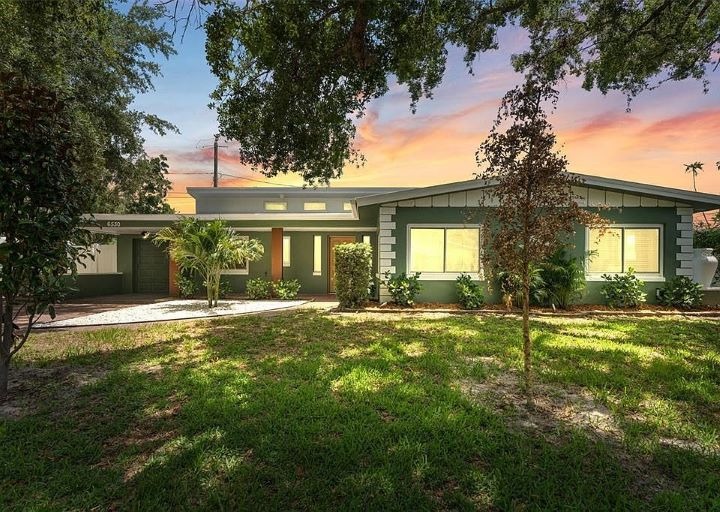
- Demand: Strong Gulf Coast leisure demand supported by beaches and year-round tourism from Midwest and Northeast travelers. St. Pete is also a prime location for out-of-state retirees that occupy this market in the winter months creating year round demand.
- Regulation: Unincorporated Pinellas County offers minimal regulation and more workable STR rules than the nearby incorporated areas.
- Pricing Reality: Purchase prices remain more attainable than South Florida coastal markets, allowing debt service to remain manageable and down payments to be minimal.
- Best Strategy: Single-family homes in unincorporated zones that target family and beach-oriented stays. Properties with a pool are an added bonus.
- Ridge Street’s Insight: St. Petersburg, FL is our top airbnb market in the US. The year-round demand creates the most consistently above market cash-on-cash returns out of any market in the US.
2. Orlando, Florida
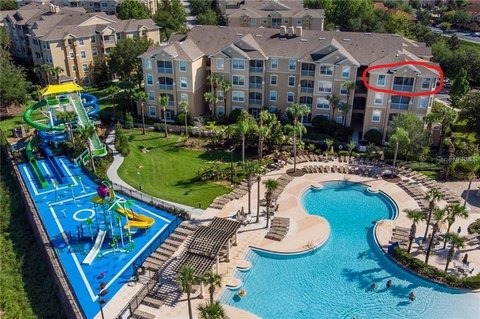
- Demand: One of the most consistent STR demand engines in the U.S., driven by theme parks, conventions, and nonstop international tourism.
- Regulation: Purpose-built vacation rental communities allow legal, scalable short-term rentals with minimal compliance uncertainty.
- Pricing Reality: Many vacation-rental corridors still offer homes priced to support high cash-on-cash returns, despite the market’s popularity.
- Best Strategy: Orlando/Kissimmee is one of the few areas in FL where condos can be a favourable strategy, with many short term rentals looking for hotel-like amenities that most single family homes don’t offer.
- Ridge Street’s Insight: Be wary of high condo fees and HOA costs in Orlando condominiums that can reduce cash-on-cash return potential.
3. Gulf Shores, Alabama
- Demand: Strong seasonal beach demand combined with dependable drive-in tourism from Southern metro areas.
- Regulation: Coastal STR rules are established and relatively predictable compared to other beach markets.
- Pricing Reality: Purchase prices remain more favorable than Florida coastal alternatives, supporting higher cash-on-cash potential.
- Best Strategy: Condos and small single-family homes optimized for peak summer occupancy with conservative off-season underwriting
4. Nashville Suburbs (Outside City Limits)
- Demand: Consistent spillover from Nashville’s tourism, live music, and event-driven economy.
- Regulation: Suburban jurisdictions avoid the restrictive caps, permit limits, and enforcement pressure found in Nashville proper.
- Pricing Reality: Lower entry prices relative to downtown Nashville improves rent-to-price ratios.
- Best Strategy: Single-family homes targeting groups and weekend stays within reasonable driving distance to downtown attractions.
5. North Georgia Mountains
- Demand: Four-season appeal driven by outdoor recreation, weekend escapes, and proximity to the Atlanta metro area.
- Regulation: Many counties maintain few STR restrictions compared to major metro markets.
- Pricing Reality: Cabins and mountain homes remain priced to support STR cash flow when properly underwritten.
- Best Strategy: Well-amenitized cabins (hot tubs, views, multiple bedrooms) that command premium ADRs and longer average stays.
6. San Antonio, Texas
- Demand: Year-round traffic in San Antonio from tourism, military bases, medical centers, and convention activity.
- Regulation: A structured and transparent STR framework provides clarity despite permit caps.
- Pricing Reality: Home prices remain more accessible than other major Texas metros, improving debt coverage.
- Best Strategy: Hybrid STR and mid-term rental properties that capture both leisure and professional demand.
7. Boston, Massachusetts
- Demand: Extremely durable demand from education, healthcare, biotech, and business travel.
- Regulation: High barriers to entry significantly limit supply, supporting premium nightly rates.
- Pricing Reality: High acquisition costs require disciplined underwriting and experienced operators.
- Best Strategy: Investors in the greater Boston area should prioritize 2-4 Unit properties. Renovated multifamily properties attract the same demand as SFRs in Boston with higher cash-on-cash return.
- Ridge Street’s Insight: Despite Boston’s heavier regulation and limited inventory, the short term rental market is extremely strong and consistently produces high cash-on-cash return for well capitalized investors.
8. Long Island, New York
- Demand: Seasonal beach tourism combined with spillover from New York City travelers.
- Regulation: Select towns offer clearer legal paths to STR operation compared to NYC.
- Pricing Reality: Pricing varies significantly by town, making market selection critical.
Best Strategy: Summer-focused STRs with shoulder-season optimization and conservative year-round assumptions.
9. Atlanta, Georgia
- Demand: Diversified economy supports year-round visitation from film production, corporate travel, higher education, and events.
- Regulation: More workable STR environments exist in select suburban jurisdictions.
- Pricing Reality: Suburban price efficiency allows stronger cash-on-cash returns than many coastal markets.
- Best Strategy: Flexible properties that perform as STRs while remaining viable mid-term rentals when demand shifts.
10. Houston Suburbs (Outside City Limits)
- Demand: Consistent year-round demand driven by the Texas Medical Center, energy sector, aerospace, and large-scale industrial and construction projects.
- Regulation: Suburban jurisdictions around Houston generally maintain more flexible short- and mid-term rental environments than many major metros.
- Pricing Reality: Entry prices in select suburbs remain attractive relative to income potential, allowing leverage to support positive cash flow.
- Best Strategy: Furnished mid-term rentals and hybrid STR/MTR properties targeting traveling professionals, contractors, and extended-stay guests.
Emerging Airbnb Markets with High Upside
The best future returns often come from markets that haven’t been crowded yet. These emerging regions offer a rare mix of affordability, predictable regulations, and rising traveler demand.
Unsaturated Coastal Markets
These smaller coastal towns on the East Coast (Maine, Rhode Island, North West Florida) are seeing steady growth in bookings without a corresponding surge in supply. They attract regional families looking for accessible beach experiences at a lower cost than major coastal metros, providing lower purchase prices and lighter regulatory environments.
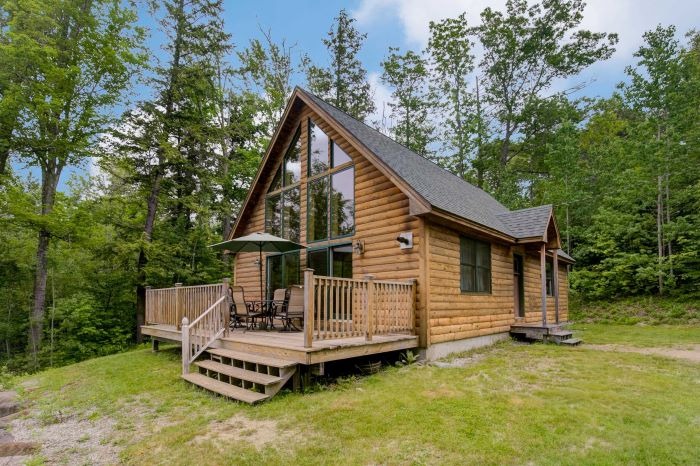
Rural Areas with Vacation Appeal
Rural recreation destinations have transformed into high-performing STR zones as travelers favor drivable, nature-oriented escapes. These locations offer premium performance for cabins, cottages, and character homes, and align well with guests looking for multi-family gatherings and extended, remote-work stays.
Mid-Sized Business Centers
Not all strong markets revolve around leisure. Many mid-sized metros deliver high booking stability by serving a diverse mix of institutional demand, including corporate and project-based travel, medical stays, and sports tournaments. These areas feature moderate ADRs but reliably stable occupancy, especially when you combine short-term and 30- to 60-day stays.
Oversaturated Airbnb Markets
These markets were the rising stars five years ago, but now they are mature and oversupplied.
Myrtle Beach, South Carolina
- What Changed: Massive condo oversupply means the vast majority of units are now STRs, leading to saturation and lower occupancy rates.
- Investor Action: You must buy well below peak pricing and avoid buildings with elevated HOA fees that erode net returns.
Pigeon Forge, Tennessee
- What Changed: The number of vacation homes has grown faster than tourism demand, leading to high saturation.
- Investor Action: Underwriting must reflect downward pressure on rates. Only premium, standout properties maintain pricing power.
Durham, North Carolina
- What Changed: The combination of relatively low ADR and high property taxes squeezes margins.
- Investor Action: Properties require conservative assumptions and a tight operational model to justify elevated purchase prices.
Broken Bow, Oklahoma
- What Changed: Rapid development caused rising property taxes, oversupply, and stiff competition after the pandemic boom.
- Investor Action: Yields have compressed. You must acquire properties with unique design or prime amenities to justify premium rates.
Oversaturated markets are mature. This means you must buy at a discount or with clear value-add potential. Disciplined acquisition and realistic projections are the difference between a consistently performing asset and an underwhelming one.
How to Analyze Any Airbnb Market (Beginner-Friendly Framework)
Every investor must be able to analyze any market using a simple, repeatable system.
- Run Revenue Comps: You must pull revenue projections from tools like AirDNA, Mashvisor, or Alltherooms to establish a realistic revenue range for your property.
- Check STR Regulations: Confirm the property is clearly legal to operate as an STR by checking permit requirements, zoning, and HOA bylaws. If it isn’t clearly legal, move on.
- Factor in Local Taxes and Insurance: Research property tax rates and STR-specific occupancy taxes. These often overlooked costs can dramatically change the deal economics.
- Estimate Your DSCR: Calculate the Debt Service Coverage Ratio (NOI ÷ Annual Debt Service). A DSCR of 1.0+ ensures the property can support its own mortgage.
- Stress Test at 50-60% Occupancy: Run your numbers at 60% and 50% occupancy. If the property still cash flows, your risk is dramatically lower.
- Run the Full Investment Model: Plug your data into our investment calculators. Use our DSCR Calculator for turnkey rentals, and our BRRRR Calculator for fix and refinance projects.
Financing Options for Airbnb Investors (2026)
Selecting the right Airbnb market is only half the equation. Financing structure directly determines cash flow, risk exposure, and scalability. Two identical properties in the same market can produce very different returns based solely on loan structure.
Short-term rentals introduce variability - seasonality, operating expenses, and fluctuating occupancy - that makes financing strategy especially important. Below are the primary financing options Airbnb investors use in 2026, and when each one actually makes sense.
DSCR Loans (Cash-Flow–Based Financing for STRs)
What it is:
Debt Service Coverage Ratio (DSCR) loans qualify borrowers based on the property’s ability to service its own debt rather than the borrower’s personal income. For STRs, revenue projections are used to determine whether the property meets minimum coverage requirements (typically DSCR ≥ 1.0).
When to use it:
The preferred option for most Airbnb investors - especially those looking to scale. DSCR loans allow investors to grow portfolios without personal income becoming a bottleneck.
Why it matters:
DSCR financing aligns underwriting with how Airbnb investments actually perform: revenue-driven, not W-2 driven.
Ridge Street insight:
Our DSCR calculator allows investors to stress-test occupancy, rates, and loan terms to confirm a deal remains financeable under conservative assumptions.
Conventional Loans
What it is:
Traditional bank financing offers the lowest interest rates, typically reserved for primary residences, second homes, and select low-leverage investment properties.
When to use it:
Best suited for investors purchasing a second home that will be used part-time as an Airbnb or for low-leverage acquisitions in highly predictable markets. Conventional loans work well when cash flow is not heavily dependent on peak-season performance.
Trade-off:
Strict debt-to-income requirements, limited property counts, and slower scalability. Conventional loans optimize rate, not flexibility.
Portfolio and Commercial Loans
What it is:
A single loan structure secured by multiple properties, commonly used by professional operators managing several STRs or mixed-use rental portfolios.
When to use it:
Ideal for investors transitioning from individual deals to a portfolio-level strategy. Portfolio loans simplify administration and can improve capital efficiency when structured correctly.
Risk consideration:
Cross-collateralization increases exposure if one property underperforms, making conservative underwriting essential.
Ridge Street insight:
We model portfolio-level cash flow, vacancy risk, and downside scenarios to ensure the entire portfolio remains stable, not just the strongest asset.
HELOCs and DSCR Cash-Out Refinances
What it is:
Leveraging existing equity from a primary residence or investment property to fund down payments, acquisitions, or renovations.
When to use it:
Effective for experienced investors seeking to reduce upfront capital requirements or accelerate acquisition timelines without liquidating assets.
Key question to ask:
Does the projected return of the Airbnb exceed the blended cost of borrowed equity after accounting for risk and seasonality?
Ridge Street insight:
We evaluate whether using leveraged equity improves true cash-on-cash returns or simply increases exposure.
Renovation, BRRRR, and Value-Add Loans
What it is:
Short-term acquisition and renovation financing—commonly called hard money loans—used to reposition properties through cosmetic upgrades, layout optimization, or furnishing.
When to use it:
Best for investors executing value-add strategies where improvements materially increase ADR, occupancy, or guest appeal.
Execution matters:
These strategies offer high upside but require accurate timelines, realistic budgets, and a clear refinance exit.
Ridge Street insight:
Our BRRR calculator helps investors model renovation costs, refinance proceeds, and stabilized cash flow before committing capital.
Final Thought on Airbnb Financing
Airbnb profitability is not just about picking the right market - it’s about aligning market revenue, financing structure, operating expenses, cash reserves, and realistic occupancy assumptions. Professional investors underwrite all five variables together.
At Ridge Street Capital, we help investors evaluate Airbnb deals with the same rigor used by institutional operators before capital is committed.
As a real estate investor, you can get pre-approved or submit a specific property for airbnb financing.
Where Should You Buy an Airbnb in 2026?
Florida, Texas, and a mix of emerging coastal, rural, and mid-sized business markets all present top airbnb investment opportunities in the US today. The playbook for finding a good STR is consistent: use real revenue data, confirm legal viability, factor in taxes and insurance, run DSCR and stress tests, and choose financing that fits the strategy.
In this article we selected Unincorporated St. Petersburg, FL as the number one place to buy an airbnb based on the number of high cash-on-cash return deals that come out of this area.
Best Places to Buy an Airbnb FAQs
What makes certain cities better for Airbnb hosts than others?
Profitable cities combine strong demand drivers such as theme parks, vibrant nightlife, business travelers, and popular tourist attractions. These markets support higher rent, more bookings, and better annual revenue. The right Airbnb market also has predictable local regulations so hosts are not blindsided after they buy. Real estate is local; the best locations often come down to picking the right neighborhood inside a broader high-demand area.
How can I avoid overpaying for an Airbnb rental property in today’s market?
Do thorough research on supply, occupancy, and seasonal demand before you buy Airbnb listings. Compare home values and daily rate performance across similar properties. Avoid areas where new vacation rentals are growing faster than travelers. Short term rental markets with too much supply push revenue down. Investors should stress test returns so the Airbnb business still works within their budget and risk plan even with softer months.
Does a good Airbnb market guarantee a good deal?
No. Market quality and deal quality are separate questions. A property in a top-ranked market can still underperform if it is purchased above the rent-to-price ratio the market supports, or if renovation and furnishing costs run over budget. Conversely, a disciplined investor can find a strong deal in an overlooked submarket that never appears on a top-10 list. Market selection narrows the search to places where the odds favor the investor; it does not replace underwriting the specific property. For a full framework on evaluating an individual Airbnb deal once a market is chosen, see the Airbnb investment analysis guide.
How often should an investor re-evaluate whether their Airbnb market is still performing?
Short-term rental markets shift faster than long-term rental markets because new supply can enter quickly and regulations can change with little notice. Reviewing occupancy, ADR trends, and local regulatory updates at least once a year, and after any local policy announcement, helps investors catch saturation or new restrictions before they affect cash flow. Investors holding multiple STR properties across different markets should stagger this review rather than treating all properties as static assets.
Zach Cohen is the Managing Partner of Ridge Street Capital, a direct private lender providing hard money and DSCR loans to real estate investors across 35 states. Under his leadership, the firm has funded nearly $100 million in investment property loans. He regularly works with real estate investors on rental property acquisitions, refinances, and fix-and-flip projects across the country.
Fix and Flip Loans
Funding For Purchase + Rehab
- $50,000 up to $3,000,000
- Interest Rate 10.5%-11.5%
- Origination Fee From 1.5%
- Up to 90% of Purchase and 100% of Rehab

DSCR Loans For Long Term Rentals
Perfect for first-time investors or experienced investors scaling their rental portfolio.
- Up to $2,000,000
- Interest Rates from 6.0%
- Origination Fee From 0%
- Up to 80% of LTV

DSCR Loans For Short Term Rentals
Designed for investors pursuing higher rents with a short term rental strategy.
- Up to $2,000,000
- Interest Rates from 6.25%
- Origination Fee From 0%
- Up to 80% LTV
Ready to Get Started?
.svg)