Overview:
- A BRRRR loan is not one product. It is a sequence of two: a short-term hard money loan that funds acquisition and renovation, then a long-term DSCR loan that refinances the property once it is leased and stabilized.
- Conventional financing cannot cover the first phase. Lenders require habitability at closing, which excludes most distressed acquisitions, and a 30 to 45 day timeline does not work at auction or off-market.
- The first loan funds up to 90% of purchase and 100% of renovation, underwritten on after-repair value. The second qualifies on rent covering the payment at a ratio of 1.0 or higher, with cash-out capped at 75% loan-to-value.
“BRRRR loan” is not a single loan product. Investors use the term to describe the two-loan financing sequence behind every BRRRR (Buy, Rehab, Rent, Refinance, Repeat) deal: a short-term hard money loan to acquire and renovate the property, followed by a long-term rental loan to refinance, hold it, and recover invested capital.
Most investors searching this term already understand the BRRRR method. This is the strategy of buying distressed properties, renovating them, renting them out, and refinancing to repeat the cycle. What they need is a clear explanation of the financing mechanics: how the two loans work together, how to structure each one, and what determines how much capital comes back at the refinance.
That is what this guide covers.
What Are BRRRR Loans?
BRRRR loans are not a single loan product. Instead, the term refers to the investment property loan structure used to finance BRRRR deals, which relies on two separate loans:
- A short-term hard money / fix-and-flip loan used to purchase and renovate the investment property
- A long-term DSCR rental loan used to refinance the property after it is leased and stabilized
Together, these loans allow real estate investors to recover much, or in some cases all, of their original cash investment and redeploy it into the next BRRRR project.
What Loans Do You Use for the BRRRR Method?
Properties purchased for value-add rental strategies often can't be financed with traditional owner-occupied or conventional investment property mortgages. The physical condition of the asset for most BRRRR projects, renovation scope, and the investor’s exit strategy differ significantly from standard buy-and-hold purchases financed with conventional loans.
Many of these properties are distressed at acquisition, requiring major repairs and mechanical system upgrades before they can be rented. Conventional lenders typically require properties to meet minimum habitability standards at closing, which excludes a large portion of value-add acquisitions.
Speed is also an important factor. Investors frequently purchase through off-market transactions, auctions, or competitive situations where a 30- to 45-day closing timeline is not realistic. Short-term hard money loans are designed to close quickly and are underwritten based on the property’s after-repair value rather than the current condition.
Finally, this investment approach relies on a cash-out refinance after renovation is complete and properties are leased. Traditional mortgage programs often impose lengthy seasoning requirements, strict income documentation, and limits on the number of financed rental properties. Alternative investment property loans, such as Ridge Street’s DSCR Loan Program, allow refinancing based on rental income and appraised value instead of the borrower’s personal income.
For these reasons, investors typically use a two-loan financing structure specifically designed for renovation-to-rental projects rather than conventional mortgage products.
The Two-Loan Structure Used in BRRRR Financing
The first loan is a short-term acquisition and renovation loan also called a hard money loan or fix and flip loan. This financing covers up to 90% of the purchase of the property and up to 100% of the cost of renovations, allowing investors to acquire distressed assets and improve them to rentable condition, with as little as a 10% down payment.
The second loan is a rental refinance loan (typically a DSCR loan). Once the property is renovated, leased, the increased value (ARV) is achieved, the property cashflow is used to support long term rental property financing.
When a BRRRR project is financed correctly, investors can cash-out refinance their entire equity position at project completion and use those proceeds to repeat this BRRRR investment strategy.
This two-loan structure allows investors to move from acquisition to stabilization efficiently while recovering capital through a cash-out refinance rather than leaving funds tied up long term.
BRRRR Financing: Quick Review
What You Need to Qualify at Each Stage
Neither phase requires personal income verification. The hard money loan qualifies on the property's projected ARV. The DSCR refinance qualifies on the rent the property generates after stabilization. Investors with complex tax situations, self-employment income, or multiple existing mortgages qualify on the same basis as anyone else.
Phase 1: Hard Money Loans for BRRRR Properties
Hard money loans are short-term investment property loans used to acquire and renovate properties that don't qualify for conventional financing. These loans are underwritten based on the property’s after-repair value (ARV) rather than the borrower’s personal income.
Because hard money lenders can close quickly in 7–14 days and because hard money loans include funding for renovation costs, this financing option is commonly used for distressed properties, off-market acquisitions, and time-sensitive transactions where speed is critical.
Ridge Street’s Hard Money Loan Terms
Basic Borrower Requirements
- Minimum credit score above 660 range
- Proof of funds for down payment and reserves
- Detailed scope of work and renovation budget
- Defined exit strategy (refinance or sale)
- Entity documentation if closing in an LLC
Ridge Street provides fix and flip financing for acquisition and renovation projects across 35 States, with programs structured to support renovation-to-rental strategies and reliable execution through closing and rehab draw funding.
Phase 2: The BRRRR Refinance (DSCR Cash-Out)
After the property is renovated and leased, the short-term acquisition loan is replaced with a DSCR rental loan. This refinance provides long-term financing and, in many cases, allows investors to pull cash out based on the property’s new appraised value and cashflow.
DSCR (Debt Service Coverage Ratio) measures whether a property’s rental income is sufficient to cover its mortgage payment, taxes and insurance. Unlike conventional loans, DSCR loans are underwritten using the property cash flow, not the borrower’s W-2 income.
How DSCR Is Calculated
DSCR = Monthly Rent ÷ Monthly PITIA
A ratio above 1.0 indicates the property generates enough income to support the loan.
Ridge Streets Standard DSCR Loan Terms
Seasoning Requirements for a BRRRR Refinance
Many DSCR lenders require 6 months of ownership before allowing a cash-out refinance based on the updated appraised value. Some programs offer reduced seasoning for renovation-to-rental projects, but requirements vary by BRRRR lender.
At Ridge Street our DSCR Loans for the BRRRR Strategy are specifically designed for investors to be able to refinance 100% of their hard costs upon refinancing within the 6 months of the original purchase. This means, at cash-out, our DSCR program will allow BRRRR investors to finance up to 100% of the original purchase price, rehab budget, and refinance loan closing costs as long as the total loan amount is below 75% LTV.
The Repeat: How the Financing Enables Scale
The capital recycling mechanic is what separates BRRRR from standard buy-and-hold investing. In a conventional acquisition, the down payment stays locked in the property until it is sold. In a BRRRR deal, the refinance returns a portion of that capital, and in well-structured deals, most of it. That frees capital for the next acquisition without requiring a separate pool of new equity.
In the Mississippi example below, $23,075 came back at refinance. That capital, combined with the equity retained in the property, positions the investor to fund the next deal’s down payment without returning to a savings account. Each completed BRRRR cycle increases the investor’s capacity to acquire more properties. That is the real mechanism behind portfolio scaling.
DSCR loans have no cap on the number of financed properties. Each loan is underwritten on the individual property’s rental income, regardless of what the investor already owns. An investor with ten DSCR loans qualifies for the eleventh on the same criteria as the first. This removes the conventional lending ceiling, including Fannie Mae’s 10-property limit, from the scaling equation.
Before committing to a purchase price and renovation budget, model the refinance math. Use Ridge Street's BRRRR Calculator to run the capital recycling numbers on a specific deal before acquisition.
BRRRR Loan Example: Mississippi Renovation-to-Rental
Here is how the two-loan sequence plays out on a real deal Ridge Street funded - a single-family renovation-to-rental project in Mississippi.
Deal: BRRRR Project in Mississippi
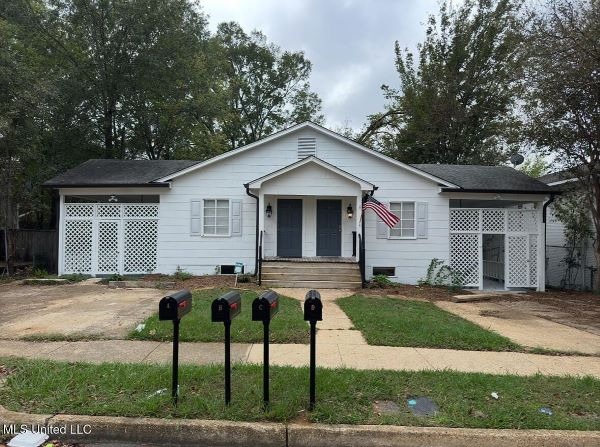
Project Parameters
- Purchase Budget: $127,500
- Renovation Budget: $40,000
Phase 1: Hard Money Loan
- Loan Amount: $148,375 (80% of Purchase Price + 100% Of Rehab Budget)
- Down Payment: $25,500
- Closing Costs (Lender Fees, Title, Insurance, etc): $5,100
- Loan Payments (4 Months): $5,440.42
Total Cost to Fix and Flip: $182,415.42
Phase 2: DSCR Cash-Out Refinance
- After Repair Value: $235,000
- DSCR loan: $176,250 (75%LTV)
- Refinance Closing Costs (Insurance, Title, Escrows): $4,800
- Payoff of short-term loan: ~$148,375
- Net cash returned to investor: ~$23,075
After refinancing, the investor recovers a significant portion of the original capital invested while retaining approximately $58,750 in equity (25% of the property’s after repair value). The property is now financed with long-term debt with the rental income covering the full cost of the mortgage, taxes, and insurance.
Pros and Cons of Using BRRRR Loans
BRRRR financing can accelerate real estate portfolio growth, but it also increases leverage and complexity compared to traditional buy-and-hold strategies.
Risk Example: If an investor purchases a property in January with a projected DSCR of 1.25 at 6% rates, but rates rise to 7% by the time they refinance in July, the DSCR may drop to 1.05-1.10. This could mean lower cash-out proceeds or a higher rate tier.
When to Use One Lender for Both Phases
A BRRRR deal needs two loans, and the lender that funds the renovation is not always the one that funds the refinance. Ridge Street Capital writes the hard money loan with the refinance already in view, so the exit is structured before the purchase closes rather than after the renovation is finished.
Investors comparing options should weigh the terms on both loans together, since strong purchase leverage means little if the refinance falls short. For a side-by-side look at the best BRRRR lenders, including rehab leverage, loan minimums, and the refinance terms that decide how much capital comes back, see our full comparison.
BRRRR Loans Frequently Asked Questions
How much of the original investment can investors recover at the refinance?
It depends on the ARV and the 75% LTV cap on the DSCR cash-out refinance. The loan at refi is sized at 75% of the property's post-renovation appraised value. After paying off the hard money loan balance and closing costs, the remaining proceeds return to the investor. On a well-structured deal where the ARV supports a loan larger than the total project cost, investors can recover 100% of their original capital. On deals with thinner margins or lower ARVs, partial recovery is more common. Running the math at 75% of a conservative ARV estimate before committing to a purchase price is the most reliable way to set accurate expectations.
What happens if the ARV appraisal comes in lower than expected?
The DSCR loan is sized at 75% of the appraised value, not the investor's projected ARV. If the appraisal is 10% below the projection, the maximum loan drops by the same percentage, which directly reduces cash-out proceeds. In the Mississippi example above, a 10% ARV shortfall reduced net cash recovered from $23,075 to approximately $5,450. Investors should model the refinance at the base-case ARV and then stress-test it at 90% of that number before locking in the acquisition price.
Can the BRRRR refinance be done before 6 months of ownership?
Most DSCR lenders apply a 6-month seasoning requirement before allowing a cash-out refinance based on the post-renovation appraised value. Ridge Street waives this requirement for borrowers who financed the acquisition and renovation through a Ridge Street hard money loan. The renovation costs were documented and funded as hard costs through the original loan, which satisfies the standard seasoning condition. The refinance can close as soon as the property is leased and stabilized with no mandatory hold period. See the full details in Ridge Street's DSCR loan requirements.
Can BRRRR investors hold properties in an LLC through both phases?
Yes. Both the hard money loan and the DSCR refinance support LLC ownership. This is one of the structural advantages of using investor-specific loan products rather than conventional mortgages, which require title in the borrower's personal name. Holding through an LLC separates investment debt from personal finances, keeps rental liability contained to the entity, and keeps active loan balances off the borrower's personal credit report. Neither loan phase requires personal income verification, so the LLC's tax returns and income history are not part of the approval calculation.

Zach Cohen is the Managing Partner of Ridge Street Capital, a direct private lender providing hard money and DSCR loans to real estate investors across 35 states. Under his leadership, the firm has funded nearly $100 million in investment property loans. He regularly works with real estate investors on rental property acquisitions, refinances, and fix-and-flip projects across the country.
Fix and Flip Loans
Funding For Purchase + Rehab
- $50,000 up to $3,000,000
- Interest Rate 10.5%-11.5%
- Origination Fee From 1.5%
- Up to 90% of Purchase and 100% of Rehab

DSCR Loans For Long Term Rentals
Perfect for first-time investors or experienced investors scaling their rental portfolio.
- Up to $2,000,000
- Interest Rates from 6.0%
- Origination Fee From 0%
- Up to 80% of LTV

DSCR Loans For Short Term Rentals
Designed for investors pursuing higher rents with a short term rental strategy.
- Up to $2,000,000
- Interest Rates from 6.25%
- Origination Fee From 0%
- Up to 80% LTV
Ready to Get Started?
.svg)