


DSCR Loan South Carolina




- LTV: 75%
- Term: 30 Year
- Rate: 7.375%
- Points: 1.0%







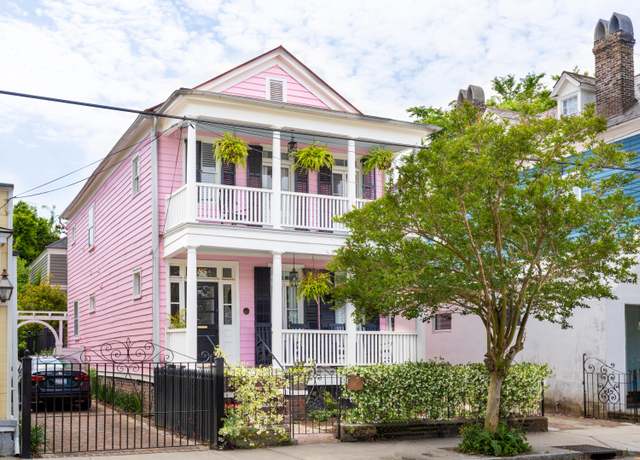
1. Charleston
2. Columbia
What are dscr loans used for in South Carolina?
DSCR loans are a powerful financing tool for real estate investors in South Carolina, allowing them to qualify for loans based on the rental income potential of the property rather than personal income.
These loans use the Debt Service Coverage Ratio (DSCR)—a calculation comparing rental income to property expenses to determine eligibility and loan amounts.
In South Carolina, where rental demand is strong, DSCR loans are commonly used to finance long-term rental properties, short-term vacation rentals, and multi-unit buildings.
For those following the BRRRR investing strategy, DSCR loans are ideal for refinancing after stabilizing a property. This strategy allows investors to build a portfolio of rental properties while preserving capital for future projects.
If you're considering investing in Airbnb rentals, DSCR loans can also help finance short-term rentals in South Carolina’s high-demand vacation markets. Learn more in our guide: Financing Airbnb Rentals with DSCR Loans.
To understand how to calculate DSCR and determine your eligibility, visit the How to Calculate DSCR section of this page.

South Carolina DSCR Loan Products
Low Rates, from 0% Origination for long term & short term rentals in South Carolina.
.png)
Long Term Rental
DCSR Loans South Carolina

Rates from 6.0%
LTV Up To 80%
From 0% Origination Points
Minimum DSCR: 1.0
Closing Time 21 Days
Appraisal Required
Minimum Credit Score: 660
Property Condition C4 Required
Purchase, Refinance, and Cash Out Available
.png)
.png)
Short Term Rental
DCSR Loans South Carolina

Rates from 6.25%
LTV Up To 80%
0-1% Origination Points
Minimum DSCR: 1.0
Closing Time 21 Days
Appraisal Required & AirDNA Check
Minimum Credit Score: 700
Property Condition C4 Required
Purchase, Refinance, Cash Out Available
.png)
How To Determine DSCR For South Carolina Rental Properties?
The Debt Service Coverage Ratio (DSCR) is calculated by dividing the monthly rent of the property by the monthly loan payment (principal + Interest), taxes, insurance and association fees (PITIA).
DSCR = Rent/PITIA
The basis of a DSCR loan in South Carolina, is that the rent you collect from tenants leasing the property should be greater than the cost to own and operate the property.
Investment purpose rental properties with a DSCR greater than 1.0 are called “cash flowing”. You can calculate the DSCR of your rental property with our DSCR Loan Calculator.
(DSCR Evaluation)
Property Value: $474,000
Loan: $379,200
Interest Rate: 7.25%
Amortization: 30 YR (FRM)
Monthly Rent: $3,995
P&I Payment: $2,586.81
Monthly Taxes: $400.00
Monthly Insurance: $180
Monthly HOA: $0

DSCR 1.26
Quick & simple
South Carolina DScr Loan process
Ridge Street closes South Carolina DSCR loans in 14-21 days.

Apply Or Get Pre-Approved Online
~ 2 minutes
Fill out a 2 Min Quick App with info about your project. We need some preliminary information so that we can accurately evaluate your deal and provide a quote.
If you’re looking to be pre-approved so that you can find your next deal or you’d like to get more info from one of our team members, select an option below.

Receive Your Term Sheet
~ 2 hours
Once we have your completed application, we’ll email you the Term Sheet and give you a call to provide confirmation.

Submit Docs & Order Appraisal
~ 1–7 days
Once you’ve accepted the Loan Terms, we’ll collect your remaining documents and order an appraisal. We have a low document program with no income statement documentation. See our full dscr loan requirements document checklist.

Underwriting And Final Approval
~ 2–5 days
Once you've submitted your documents and we've received the completed appraisal, the loan will enter the underwriting process. Underwriting is simply an internal review of your borrower documents and title documents before the loan is cleared to close.

Closing
~ 2 days
Once the loan is cleared to close, the title company will schedule a time for closing. Loans typically close within 48 hours of final approval.
.png)
When To Use a DSCR Loan?
DSCR loans are used by investors to "hold" real estate. These loans are long term and amortizing. This allows investors to continuously gain equity in their property while generating monthly cashflow.
Investors use DSCR loans either to purchase a rental property or refinance one they already own. In the BRRRR calculation, the DSCR loan is used to refinance the finished rental and cash out part of the equity created through the renovation.
Benefits Of DSCR LoanS Compared To Other Loan Types
Other benefits of DSCR loans include:
- No income verification
- Can be used for long term and short term rentals (Financing Airbnb's for example)
- Cost Effective
Best Rental Markets in South Carolina for DSCR Loans
South Carolina ranks among the fastest-growing states in the country and is often ranked as one of the best states to buy rental property. Consistent in-migration from the Northeast and Midwest, a business-friendly tax environment, and an economy anchored by aerospace, port logistics, healthcare, tourism, and higher education all drive that growth. The state has no rent control, a landlord-favorable regulatory structure, and one of the lower effective property tax rates in the Southeast — all of which reduce the operating cost side of the DSCR equation. Housing demand has grown faster than new supply in most South Carolina markets, keeping vacancy tight and supporting steady rent growth across both urban centers and their suburban corridors. Charleston and Columbia serve different investment profiles: Charleston is a coastal market with premium rents and strong in-migration, while Columbia is a high-yield university and government capital market with acquisition prices well below the state average. Both qualify cleanly for DSCR financing on the strength of their respective tenant bases.
Charleston
Charleston is one of the most in-demand rental markets in the Southeast, drawing consistent tenant demand from Boeing's North Charleston aerospace operations, the Medical University of South Carolina, the Port of Charleston, and a tourism economy that sustains short-term rental income year-round. Roughly 44% of Charleston households rent rather than own, and the gap between the income required to buy versus rent in the metro is locking a creditworthy, professional tenant pool into long-term leases with no near-term exit. The multifamily construction wave of 2021 to 2024 has slowed significantly, and the supply pipeline thinning heading into 2026 and 2027 is gradually restoring pricing leverage to landlords. For DSCR investors, the suburban submarkets of Summerville, Goose Creek, and North Charleston offer the strongest cash-flow ratios, with acquisition prices well below the downtown peninsula and rental demand supported by the same employment base.
Columbia
Columbia combines two of the most reliable rental demand drivers available in any mid-size market: a state capital with roughly 35,000 University of South Carolina students cycling through the rental market annually, and a healthcare and government employment base anchored by Prisma Health and the South Carolina State Government that produces stable, professional long-term tenants. Acquisition prices run roughly 37% below the national median, which produces DSCR ratios that qualify cleanly on a wide range of property types. Rent growth has been steady and appreciated meaningfully since 2020, vacancy holds at moderate levels supported by consistent in-migration, and the market has not experienced the speculative overheating that has complicated underwriting in larger Sun Belt cities. For DSCR investors prioritizing yield and predictability over appreciation, Columbia's combination of affordable entry, diversified tenant base, and stable operating fundamentals makes it one of the stronger qualifying markets in South Carolina.
South carolina DSCR Loan FAQ’s
How can I Improve the DSCR of my property?
- Increase Your Down Payment. By Increasing your down payment your loan amount will go down and your DSCR will increase. If you’re struggling to improve your DSCR past 1.0, increasing your down payment is an option you may have to consider.
- Ask Your Lender About A Rate Buy Down. Some lenders, including Ridge Street, allow you to pay an additional fee at closing in exchange for a lower rate. In some cases, a rate buydown will allow you lower your DSCR without increasing your overall cash required to close.
- Push For Less Expensive Insurance. Ask your insurance broker if there is anything they can do to lower your policy fee. A lower insurance policy fee will increase your DSCR.
Could I use a DSCR loan if I have to renovate a property?
You can start by getting a short term fix and flip loan to renovate the property and then refinance the property with a DSCR loan. The strategy of buy, rehab, rent, refinance, and repeating is called The BRRRR Strategy.
Can I use a DSCR loan on a Vacation property?
Absolutely! This is one of the main use cases for a DSCR loan. Also, called short term rentals, DSCR loans for short term rentals use the AirDNA projected rental income from the vacation property in the DSCR calculation as opposed to the long term market rent.
What loan amounts can I get for a DSCR loan in South Carolina?
Between $50K and $2M. As long as a the DSCR is greater than 1.0, Ridge Street will lend on it.
Are DSCR loans only for investment properties?
Yes. If you are buying a piece of real estate which you intend to live in, then you would not qualify for a DSCR loan.
For refinances and cash outs, does the property have to be rented?
The short answer is no. We understand that investors who fix and refinance properties intend to refinance as soon as possible after renovating a property.
This said, providing a DSCR loan on a rental property that is not rented is higher risk. We'll want to see that the market you are in is very "rentable" at the market rent for your property. We will not provide a DSCR loan on a rental property that has been listed for rent for 3 months with no bites, for example.


.webp)