1031 Exchange Loan: Why DSCR Is the Best Financing Option
Finance a 1031 exchange replacement property with a DSCR loan using rental cash flow instead of personal income. LLC-friendly with closings in 21-25 days.
nmin readReleased on:May 12, 2026Last updated on:September 1, 2026


Overview:
- A 1031 exchange can still use financing. The investor can finance the replacement property without breaking the exchange. Loan proceeds are separate from exchange proceeds, so borrowing can be used alongside reinvested sale funds.
- The deadlines are fixed. Once the relinquished property closes, the investor has 45 days to identify replacement properties in writing and 180 days to close. A DSCR loan can fit that window because it qualifies on the property’s rent instead of tax returns or personal income documentation.
- Debt still has to be replaced or offset. If the old loan is paid off and the replacement property carries less debt, the shortfall can create taxable mortgage boot unless the investor offsets it with additional cash or qualifying replacement debt.
Investors can finance the replacement property in a 1031 exchange. Using all-cash exchange proceeds ties up capital that could otherwise fund the next acquisition. It also gives up the leverage advantage that rental property investing is built on.
A DSCR loan is the most practical financing vehicle for this scenario: it qualifies on the replacement property's rental income, closes in 21 to 25 days, supports LLC ownership, and satisfies the IRS requirement to replace the debt from the relinquished property.
This guide covers how DSCR loans work within a 1031 exchange, what the financing sequence looks like from sale to close, and what investors need to qualify.
Can You Finance a 1031 Exchange Replacement Property?
A 1031 exchange allows real estate investors to sell an investment property and defer capital gains tax by reinvesting the proceeds into a replacement property of equal or greater value. The sale proceeds flow through a Qualified Intermediary and must go directly toward the replacement acquisition.
The investor has 45 days to identify the replacement property and 180 days to close on it.
Financing the replacement property with a loan does not disqualify the exchange. The IRS rules govern how the exchange proceeds are handled. They do not restrict the investor from borrowing additional funds to complete the acquisition. Loan proceeds are separate from exchange proceeds and are treated independently.
For investors who want to acquire a larger replacement property than the exchange proceeds alone would allow, or who want to preserve cash for the next deal, a loan is not only permitted but often the logical approach. A DSCR loan is the financing structure best suited to this scenario for reasons covered below.
Why a DSCR Loan Works Best as a 1031 Exchange Loan
A DSCR loan qualifies the replacement property on the rental income it generates, not on the investor's personal income. That matters in a 1031 exchange context for three reasons: conventional mortgage financing requires income documentation that many rental property investors cannot cleanly provide, it takes 45 to 60 days to close, and it does not support LLC ownership. Check our guide to compare DSCR vs Conventional loans for more information.
No Income Verification: Critical for Self-Employed Investors. DSCR loans qualify on the replacement property's rental income relative to its monthly debt service. No W-2s, tax returns, or personal income documentation are required. The property qualifies on what it produces, not on what the investor's tax returns show after depreciation write-offs.
Closes in 21 to 25 Days: Built for the 180-Day Deadline. The 1031 exchange clock starts the day the relinquished property closes, giving the investor 180 days to close on the replacement. A DSCR loan at Ridge Street Capital closes in 21 to 25 days, fitting inside that window without requiring a bridge loan as an intermediate step.
LLC Closing: Matches Standard Exchange Ownership Structure. DSCR loans close in the name of an LLC from origination, meaning title vests in the entity at closing without a post-closing transfer. For a full breakdown of entity requirements at closing, see the DSCR loan for LLC guide.
Satisfies the IRS Debt Replacement Requirement. The IRS requires the replacement property to carry debt equal to or greater than the debt on the relinquished property. A DSCR loan on the replacement property directly satisfies that requirement, eliminating the mortgage boot exposure without requiring the investor to contribute additional equity.
How a 1031 Exchange and DSCR Loan Work Together: Step by Step
The DSCR loan process must align with the exchange timeline. Financing preparation should begin before the relinquished property is listed. The loan timeline must align with both the 45-day identification window and the 180-day closing deadline, and the financing process should begin before the relinquished property is listed.
Step 1: Get pre-approved before listing the relinquished property.
Pre-approval establishes the loan amount, rate range, and DSCR requirements before the exchange begins. That information has practical value during the property search: it defines which replacement properties are financially viable and what rental income the property needs to generate to qualify.
Going into the 45-day identification window without a confirmed loan profile means evaluating properties without knowing whether the financing will support them. Pre-approval takes that uncertainty off the table before the exchange clock starts.
Step 2: Close the relinquished property sale and transfer proceeds to the Qualified Intermediary.
At closing, the sale proceeds go directly to the Qualified Intermediary. It is a third-party entity required by IRS rules to hold the funds during the exchange. The investor does not receive or have access to the proceeds at any point.
The QI holds the funds until the replacement property closing, at which point they are applied toward the purchase. The 45-day identification window and the 180-day closing deadline both begin on the date the relinquished property closes.
Step 3: Identify the replacement property within 45 days.
The IRS allows investors to identify up to three potential replacement properties during the 45-day window. The identification must be submitted in writing to the QI by the deadline. Pre-approval defines the loan ceiling, the minimum rental income required, and the DSCR the deal needs to clear.
The property search starts from those parameters rather than working backward from a deal that may not qualify.
Step 4: Get the replacement property under contract and submit the loan application.
Once a replacement property is under contract, the full loan application is submitted to the DSCR lender along with the purchase contract, property details, and any available rental income data. The lender orders the appraisal, which confirms the property's market value.
Step 5: Close the DSCR loan before the 180-day deadline.
At closing, the QI transfers the held exchange proceeds to the title company as the down payment. The DSCR loan funds the remainder of the purchase price. The title company disburses both sets of funds simultaneously, completing the acquisition.
The 1031 exchange is satisfied: the proceeds have been reinvested into a like-kind replacement property within the required window, and the new DSCR loan satisfies the IRS debt replacement requirement.
1031 exchange DSCR loan: A Case Study
A self-employed real estate investor based in Charlotte, North Carolina, had owned a single-family rental in the south Charlotte suburbs since 2017. The property was purchased for $285,000 and appreciated to $620,000. The outstanding mortgage balance was around $180,000. Selling without an exchange would have triggered a capital gains liability on roughly $335,000 in appreciation.
The investor engaged a Qualified Intermediary, obtained pre-approval before listing the property, and closed the sale. After the agent commission and closing costs on the sale, approximately $440,000 in net proceeds transferred to the QI. The 45-day identification window opened on closing day.
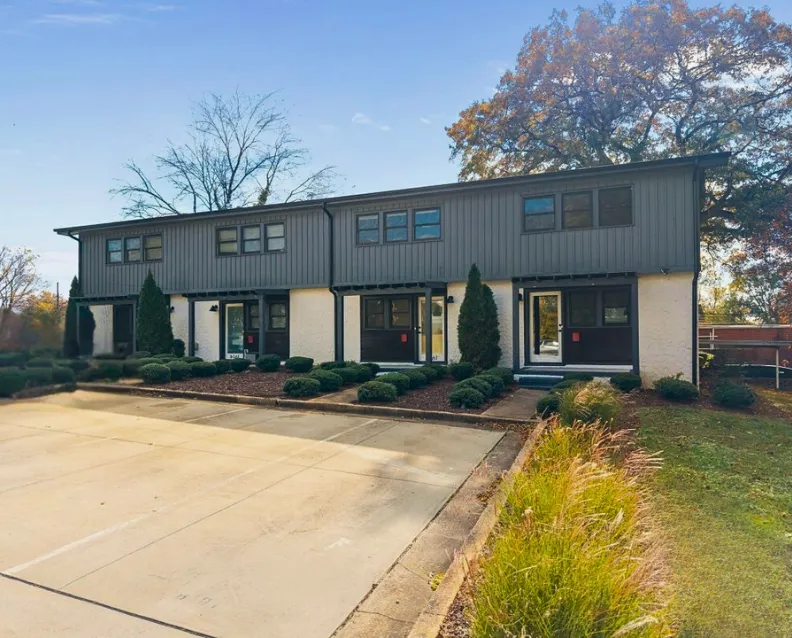
The replacement property was a 4-unit residential building in Raleigh,NC, under contract at $950,000. The four units leased at $1,365 per month each, producing $5,460 in monthly gross rent. The $440,000 in QI-held proceeds served as the down payment.
Ridge Street Capital funded a $510,000 DSCR loan at 54% LTV. The $510,000 loan exceeded the $180,000 relinquished mortgage, satisfying the IRS debt replacement requirement. The loan closed on day 47.
The investor deferred the capital gains tax, moved from a single-family asset to a four-unit income property with stronger cash flow, and retained a low-leverage position with equity still working in the deal.
1031 Exchange DSCR Loan Requirements
The requirements for a DSCR loan on a 1031 exchange replacement property are the same as for any DSCR purchase.
- Minimum DSCR: 1.0 — the property's projected or in-place rental income must cover the full monthly PITIA
- Maximum LTV: 80% on purchase
- Minimum credit score: 660 FICO for long-term rentals; 700 for short-term rentals and first-time investors
- Property types: Single-family, 2-4 unit residential, multifamily 5-10 units, short-term rentals
- Ownership: Individual name or LLC
For full coverage of DSCR requirements, see the DSCR loan requirements guide.
Finance Your 1031 Exchange Replacement Property with Ridge Street Capital
Ridge Street Capital provides DSCR rental loans for 1031 exchange replacement properties across 36 states for long-term rentals, Airbnb financing, and multifamily properties up to 10 units. No personal income documentation required. Term sheets are issued within 2 business hours. Most loans close in 21 to 25 days.
1031 Exchange Financing FAQ
Does taking out a DSCR loan affect the 1031 exchange tax deferral?
No. Loan proceeds are not exchange proceeds and are treated separately by the IRS. The exchange rules govern how the proceeds from the relinquished property sale are handled. Those funds must flow through a Qualified Intermediary to the replacement property without the investor taking possession. A DSCR loan taken on the replacement property is separate from the exchange mechanics and does not affect the tax deferral.
What is mortgage boot and how does a DSCR loan prevent it?
Mortgage boot occurs when the debt on the replacement property is less than the debt on the relinquished property. The difference is treated as taxable income. A DSCR loan that equals or exceeds the relinquished mortgage eliminates the mortgage boot exposure. Investors who plan to acquire a lower-value replacement property with no financing may face a taxable boot event even if all exchange proceeds are reinvested. A CPA or Qualified Intermediary should review the specific numbers before the exchange closes.
Can the replacement property be a short-term rental financed with a DSCR loan?
Yes. Ridge Street Capital finances short-term rental properties under the Airbnb loan program. For properties without operating history at acquisition, income is evaluated using AirDNA market projections filtered to comparable properties by bedroom count and property type. The short-term rental must satisfy the 1031 like-kind requirement, which it does: any investment property qualifies as like-kind to another investment property under current IRS rules.
Can the replacement property close in an LLC even if the relinquished property was in personal name?
Yes, though the structure requires attention. A 1031 exchange generally requires the replacement property to be acquired by the same taxpayer entity that sold the relinquished property. If the relinquished property was held personally, the replacement property should also close in personal name, or the investor should consult a Qualified Intermediary about the specific ownership transfer structure. Investors who want the replacement rental property in an LLC from day one should confirm the ownership structure with their QI and CPA before the exchange closes. A DSCR loan supports LLC closing once the exchange ownership requirements are confirmed.
What happens if the 180-day closing deadline is at risk?
In most 1031 exchanges, a DSCR loan closing in 21 to 25 days is sufficient. The 180-day exchange window usually provides enough time for the financing process to complete under normal conditions.
Pressure typically arises only when investors use most of the 45-day identification period or when appraisal or title issues delay closing. Investors concerned about timing should contact Ridge Street Capital before going under contract on the replacement property. Completing a pre-approval before the relinquished property closes removes much of the uncertainty by confirming the loan amount and expected timeline in advance.
If a lender-side delay threatens the exchange deadline, a short-term bridge loan can close the replacement property on time, followed by a DSCR refinance after closing. This adds an extra transaction and carrying costs, but preserves the exchange.
Zach Cohen is the Managing Partner of Ridge Street Capital, a direct private lender providing hard money and DSCR loans to real estate investors across 35 states. Under his leadership, the firm has funded nearly $100 million in investment property loans. He regularly works with real estate investors on rental property acquisitions, refinances, and fix-and-flip projects across the country.
Fix and Flip Loans
Funding For Purchase + Rehab
- $50,000 up to $3,000,000
- Interest Rate 10.5%-11.5%
- Origination Fee From 1.5%
- Up to 90% of Purchase and 100% of Rehab

DSCR Loans For Long Term Rentals
Perfect for first-time investors or experienced investors scaling their rental portfolio.
- Up to $2,000,000
- Interest Rates from 6.0%
- Origination Fee From 0%
- Up to 80% of LTV

DSCR Loans For Short Term Rentals
Designed for investors pursuing higher rents with a short term rental strategy.
- Up to $2,000,000
- Interest Rates from 6.25%
- Origination Fee From 0%
- Up to 80% LTV
Ready to Get Started?
.svg)