Investment Property Loans Explained: The Complete Financing Guide (2026)
Which financing fits your deal? See how private lenders structure investment property loans for rentals, flips and construction, and what it takes to qualify
nmin readReleased on:October 19, 2026Last updated on:October 19, 2026


Overview:
- An investment property loan finances real estate the borrower does not intend to occupy. The loan structure depends on the investment strategy, whether it involves rental income, renovation and resale, or long-term appreciation.
- Different strategies require different financing: long-term loans for buy-and-hold rentals, short-term loans for renovations, construction loans for new builds, and cash-out refinancing to access equity.
- Conventional lenders focus on the borrower's income, tax returns, and debt-to-income ratio, while private lenders place greater emphasis on the property's rental income or its projected value after renovation or construction.
Investment property loans allow investors to purchase or refinance real estate with the goal of generating returns rather than living in the property themselves. Investors may use these loans to buy rental properties that generate cash flow, renovate and resell properties for a profit, or finance ground-up construction projects.
Unlike a traditional home mortgage, investment property financing is designed around the property's intended use and investment strategy. This distinction affects interest rates, down payment requirements, qualification criteria, and the documents lenders require.
In this guide, we explain what qualifies as an investment property, which loan options are available, and how lenders evaluate borrowers and properties. We also walk through the financing process, from application to closing.
What Is an Investment Property Loan?
An investment property loan is financing secured by real estate that an investor purchases or owns to generate income or build long-term wealth. These loans primarily finance residential properties, including single-family rentals, condos, townhouses, and small multifamily buildings.
The loan structure depends on the investment strategy. Investors typically finance long-term rental properties with mortgages that have repayment terms of up to 30 years. In contrast, construction and renovation projects generally require short-term financing, which investors repay through a property sale or refinance once the project is complete.
All these types of loans share one important characteristic: the borrower does not occupy the property being financed. There are couple of exceptions covered below.
Like a traditional mortgage, the property serves as collateral for the loan. However, lenders typically charge higher interest rates, require larger down payments, and apply different underwriting standards because investment properties carry additional risk.
The reason is simple. If a borrower faces financial difficulties, they are more likely to prioritize mortgage payments on their primary residence before paying the loan on an investment property.
What Counts as an Investment Property?
It’s important to distinguish between residential and commercial investment properties. The number of units is the key factor here. Lenders classify properties with one to four units as residential.
This category includes single-family rentals, duplexes, triplexes, fourplexes, eligible condos, and townhouses. Short-term rentals listed on Airbnb or Vrbo also belong to this category. Vacation homes rented out most of the year may qualify as investment properties, although lenders have specific rules about personal use.
Starting at five units, the properties fall under the commercial multifamily category. That means different loan programs, qualification requirements, and underwriting standards.
This distinction also affects how appraisers determine property value. Since the appraisal is a key part of loan underwriting, lenders rely on it to assess the property's value and determine how much financing they can provide.
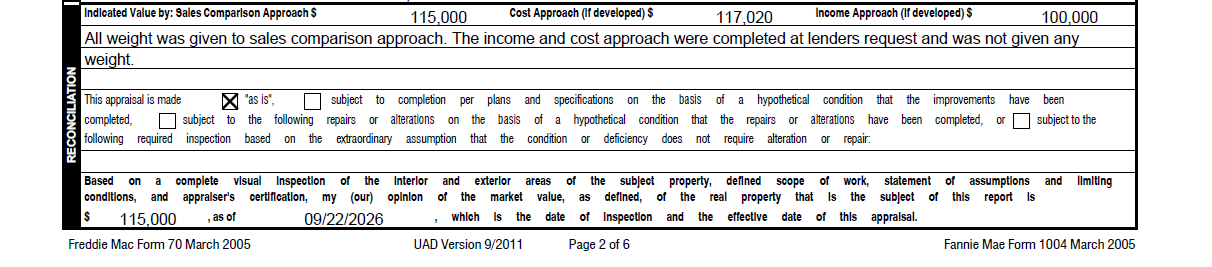
For one- to four-unit properties, appraisers use recent sales of similar nearby properties, commonly called comps. They compare size, condition, location, and other features to estimate the property's value. Rental income still matters when qualifying for the loan, but comparable sales largely determine the appraised value.
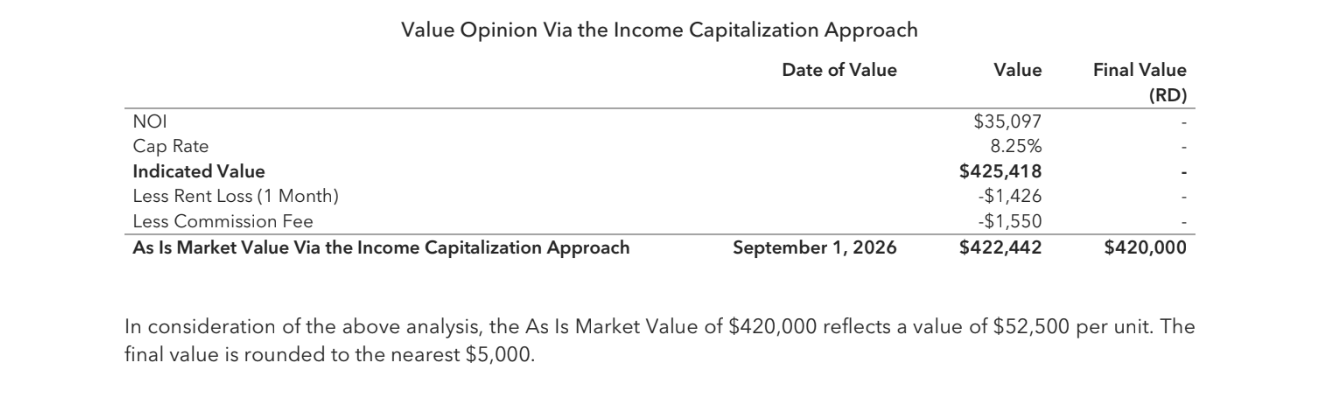
For commercial multifamily properties, appraisers focus more on income and cash flow. They use the building's net operating income (NOI) and the local capitalization rate (cap rate) to estimate its value.
Ridge Street Capital finances residential investment properties with one to four units and small multifamily from five to ten units.
Investment Property vs Second Home vs Primary Residence
A primary residence is the home where the borrower lives most of the year. Because the borrower lives there, lenders typically offer the lowest interest rates and down payment requirements.
A second home is used mainly for personal stays with limited rental activity. These properties usually carry slightly higher rates than primary residences.
An investment property is purchased to generate rental income, so lenders charge higher rates and require larger down payments.
Lenders ask about the intended use of the property during the application process. Remember: misrepresenting a rental property as a second home to qualify for better loan terms is mortgage fraud.
For a detailed comparison, see our second home vs. investment property guide.
What Type of Loan Is Best for an Investment Property?

The right investment property loan depends on what the investor plans to do with the property.
A rental that is ready for tenants can qualify for long-term financing. A property that needs renovation or has not been built yet requires short-term debt first. Once the work is complete, the investor can refinance into a long-term loan or sell it.
Three questions help narrow down the choices.
- Is the investor buying a property or refinancing one they already own? If the investor already owns the property, they can refinance the existing loan or use a cash-out refinance to access equity. For a new purchase, the next two questions help determine the right financing.
- Can the property be rented in its current condition? Long-term lenders generally require the property to be ready for tenants. If it needs major repairs, the investor usually starts with a short-term rehab loan and refinances into long-term financing once the work is complete.
- Will the lender qualify the borrower based on personal income or the property's rent? Investors who meet conventional lending requirements can qualify using personal income. DSCR lenders use the property's rental income instead.
There is one important exception. If the investor plans to live in one of the units, FHA or VA financing may be available. These programs require owner occupancy, so they cannot be used to purchase a property solely for rental purposes.
Ridge Street Capital offers all the financing options in the table except conventional mortgages, bridge loans, home equity loans, and FHA / VA loans. Those products are typically offered by banks and credit unions.
In the next section, we explain how each type of investment property loan works and which investors may benefit most from it.
For a deeper look at specific financing options, we also have dedicated guides covering DSCR loans, including how rental income affects approval and pricing; Fix-and-Flip loans, which finance the purchase and renovation in separate stages; and refinancing for rental properties, including the seasoning rules that determine how soon an investor can refinance.
Investment Property Loan Types
Investment property loans generally fall into two categories: long-term financing for properties that are in rent-ready condition and short-term financing for properties that need renovation or new construction.
The table above provides a quick comparison. Below, we take a closer look at seven financing options: conventional mortgages, rental property loans, hard money loans, construction loans, home equity loans and HELOCs, FHA loans, and VA loans.
Conventional Loans for an Investment Property
A conventional investment property loan is a mortgage backed by Fannie Mae or Freddie Mac guidelines, used to finance a property the borrower will not occupy. These loans typically offer lower interest rates than private rental financing, making them a good option for investors with steady W-2 income.
To qualify, the lender reviews personal income, existing debts, credit score, and debt-to-income ratio (DTI). This works well for investors with strong personal finances. However, as they acquire more properties, their existing mortgage payments can make it harder to qualify for the next loan.
Two limits are especially important.
- Fannie Mae allows borrowers to finance up to ten properties, while many banks apply stricter limits, often stopping at four.
- The property must also meet appraisal and habitability standards at closing. Homes requiring major repairs usually need a different financing option.
Conventional investment property mortgage rates typically run 0.5%-1% above comparable primary residence rates. Down payments generally range from 15% to 25%.
Ridge Street Capital does not offer conventional agency loans. Investors who qualify can obtain these mortgages through a bank, credit union, or mortgage broker.
Rental Property Loans
A rental property loan provides long-term financing for a property that already has tenants or is ready to rent. Unlike a conventional investment property mortgage, a DSCR loan qualifies based on the property's rental income instead of the borrower's personal income or tax returns.
A DSCR (debt service coverage ratio) loan is one of the most common financing options for rental properties. Our DSCR vs. conventional loans guide explains the key differences between the two programs.
DSCR loans typically have 30-year terms, with fixed-rate and interest-only options available. These loans are especially useful for investors who own multiple rental properties, have difficulty qualifying for conventional financing due to personal debt-to-income limits, or want to hold their properties in an LLC.
Investors can use this program to purchase long-term rental properties, but Airbnb and Vrbo properties are also eligible. The loan structure stays the same. The main difference is how lenders calculate rental income. For short-term rentals, they use projected occupancy, nightly rates, and market data to determine how much income the property can generate.
Our guide to short-term rental loans explains how it works.
Hard Money Loans for an Investment Property
A hard money loan provides short-term financing for investment properties that need renovation before they can be rented or sold. Instead of relying on the borrower’s personal income, the lender evaluates the property’s purchase price, renovation budget, expected after-repair value (ARV), and exit strategy.
Lenders typically release the funds in two stages. First, they finance part of the purchase price at closing. Then, they hold the renovation budget and release it in portions, called draws, as the borrower completes each stage of the renovation.
These loans typically have 6- to 18-month terms with interest-only payments. Interest rates are higher than those on long-term rental loans, but hard money lenders can close much faster. Our guide to hard money loan requirements explains what investors need to qualify.
Investors use hard money loans to finance house flips, BRRRR projects, and other properties that need renovation before they can qualify for long-term financing.
Construction Loans for an Investment Property
For ground-up construction loans, lenders evaluate what the property will be worth once construction is complete. Since the building does not exist yet, the appraiser uses the construction plans, specifications, and comparable properties to estimate its as-completed value.
Experience also matters more with construction financing. Lenders typically require borrowers to have completed projects before, because building a property involves managing contractors, budgets, and timelines. These risks are different from financing an existing home.
Borrowers usually contribute their own cash toward the land, while the lender releases construction funds in stages as work progresses.
Construction loans are short-term financing. Once the project is complete, the investor either sells the property to repay the loan or refinances into a long-term mortgage.
Home Equity Loans and HELOCs on an Investment Property
A home equity loan or HELOC allows investors to borrow against the equity in a property they already own. Most investors use equity in their primary residence, where interest rates are usually lower, to help cover the down payment on a rental property.
The important distinction is how investors use the funds. A HELOC can provide the cash needed for a down payment on an investment property. The investor then takes out a separate mortgage to finance the purchase.
As a result, the investor has two loans: one secured by the property they already own and another secured by the new investment property.
To qualify, lenders review the borrower’s personal income, debt-to-income ratio, credit, and available home equity, much like they do with conventional mortgages.
Ridge Street Capital does not offer home equity loans or HELOCs on primary residences or investment properties. Investors can obtain these products through banks and credit unions.
Can You Use an FHA Loan for an Investment Property?
The short answer is that FHA loans cannot be used to purchase a property solely for investment purposes. These loans require the borrower to live in the property as a primary residence, so investors cannot use FHA financing to buy a rental they never intend to occupy.
However, there is an exception that many investors use to get started in real estate.
A borrower can purchase a two- to four-unit property with an FHA loan, live in one unit for at least a year, and rent out the remaining units from day one. Investors call this strategy house hacking.
The main advantage is the lower down payment. Qualified FHA borrowers can put down as little as 3.5%, compared with the 20% to 25% typically required for other investment property loans. This makes house hacking one of the more accessible ways to start building a rental portfolio.
After meeting the occupancy requirement, the borrower can move out and rent the entire property without refinancing. The existing FHA mortgage and its interest rate remain in place.
Ridge Street Capital does not offer FHA loans. Investors interested in this strategy can apply through an FHA-approved lender.
Can You Use a VA Loan for an Investment Property?
In essence, VA loans follow similar occupancy rules as FHA loans. They are available to eligible veterans, active-duty service members, and certain surviving spouses. Because VA financing requires the borrower to occupy the property as a primary residence, investors cannot use it to purchase a rental they never intend to live in.
The same house hacking strategy works here. The difference is that VA loans can have 0% down payment.
Ridge Street Capital does not offer VA loans. Eligible borrowers can apply through a VA-approved lender.
Investment Property Loan Requirements
Regardless of the investment property loan type, lenders typically review four main parameters: down payment, borrower’s credit score and cash reserves, qualifying income (for conventional mortgages and HELOCs), and the property’s type and condition.
The specific requirements vary by loan program. The table below gives a quick comparison, followed by a more detailed breakdown of each requirement.
How Much Down Payment Is Required?
In most cases, investment property loans require 20 to 25% down. Short-term hard money loans work differently. Lenders typically finance 85% to 90% of the purchase price and up to 100% of the renovation budget. As a result, investors may need to bring as little as 10% to 15% of the purchase price, plus closing costs.
Lenders require a down payment for two main reasons.
First, it protects the lender if property values fall. When the borrower has equity in the property, that equity absorbs part of the loss before the lender's money is at risk. It also increases the chances that selling the property will cover the outstanding loan balance.
Second, lenders want investors to have their own money at stake, often called skin in the game. An investor who has invested significant cash has a stronger incentive to solve problems when a tenant leaves, renovation costs increase, or the project takes longer than expected. Without that financial commitment, walking away from a struggling investment may be easier.
Lenders consider both factors when setting loan terms. That is why 100% financing on investment properties is uncommon.
Credit Score and Cash Reserves
Most investment property loan programs require a minimum credit score of 660 (could be less for conventional investment loans), with better pricing typically available at 720 or higher. Lenders often adjust pricing and terms in 20-point FICO increments.
Credit history helps lenders understand how a borrower has managed debt in the past, for example, whether payments were made on time. Once the borrower meets the minimum credit requirement, a lower score may mean a higher interest rate, a smaller loan amount (lower LTV), or both.
Lenders also require cash reserves, usually enough to cover six months of payments.
This helps to mitigate risks with vacancy. For instance, a tenant moves out, the property sits vacant for two months, but the mortgage payment is still due. Reserves give the lender confidence that the borrower can continue making payments while the property is not generating rental income.
For hard money loans, the risks are different. Contractors can fall behind schedule, unexpected repairs can increase the renovation budget, and the investor may need more time to sell. Having enough cash available to cover these costs is important. That is also why investors should include a contingency in their rehab budget.
One important distinction: cash reserves are not a fee. The lender verifies the available funds through bank or brokerage statements, but the borrower keeps the money in their own accounts.
How Lenders Count Rental Income
Lenders calculate rental income differently depending on the loan type and property size.
For a new single-family rental purchase, conventional lenders typically use Form 1007, a market rent schedule prepared by the appraiser. They generally count 75% of the qualifying rent to account for vacancy and maintenance. For two- to four-unit properties, appraisers use Form 1025, which includes rental income for each unit.
If the investor already owns the property, conventional lenders review the rental income reported on Schedule E and make adjustments for certain expenses and deductions.
DSCR lenders use a simpler calculation. They compare the property's monthly rent with its full monthly payment, including principal, interest, taxes, insurance, and association dues.
For short-term rentals, some lenders, including Ridge Street, use AirDNA projections based on occupancy, nightly rates, and local demand. In strong vacation markets, those projections may support higher qualifying income than long-term market rent.
Properties with five or more units follow a different process. Lenders typically use the building's net operating income, which is the rental income left after operating expenses. They then compare that income with the property's debt payments.
Property Types and Condition
Property condition is another factor that lenders look at separately depending on the program.
Conventional and DSCR lenders generally require the property to be habitable and ready to rent at closing.
Hard money lenders also review property condition, but their focus is different. They want to know whether the investor can complete the repairs within the approved budget and loan term. Major structural problems, such as severe foundation damage or environmental contamination that cannot be resolved, may cause the lender to decline the deal, regardless of the borrower's qualifications or experience.
For ground-up construction loans, there is no completed building to inspect. Instead, lenders evaluate the land, construction plans, and expected value after completion.
With a home equity loan or HELOC, the borrower already owns the property. Its condition primarily affects the appraised value and how much equity the lender is willing to finance.
Most investment property loan programs cover single-family rentals, two- to four-unit properties, warrantable condos, and townhouses. Buildings with five to ten units can also qualify, but they typically require small multifamily financing. Our guide to DSCR loans for multifamily property covers how lenders underwrite buildings above four units.
Some property types are harder to finance. Non-warrantable condos may fail Fannie Mae's requirements because of factors such as low owner occupancy. Rural properties can be difficult to appraise when there are not enough comparable sales nearby. Mixed-use buildings with commercial space on the ground floor also tend to fall outside residential loan programs.
What Are the Mortgage Rates on Investment Properties?
As mentioned earlier in this guide, conventional investment property loans typically carry interest rates 0.5 to 1.5 percentage points higher than comparable primary residence mortgages. Rates are generally higher for non-agency loans, including DSCR and hard money financing, due to differences in risk profiles, funding costs, and capital market conditions.
There are 3 main factors that influence the interest rate: the property's debt service coverage ratio (DSCR) or the borrower's debt-to-income ratio (DTI), depending on the loan program; the loan-to-value ratio (LTV); and the borrower's credit score. Stronger qualifications generally help investors secure better rates.
For a detailed breakdown of DSCR pricing, see our DSCR loan rates guide. You can also explore our investment property mortgage rates guide for current conventional and portfolio loan rate ranges.
How a Private Lender Evaluates the Property
Conventional and private lenders both evaluate the borrower and the property, but they approach underwriting differently.
Conventional lenders focus heavily on the borrower's income, existing debts, and ability to make monthly payments. Private lenders place greater emphasis on the property's financial performance, value, and investment potential. They also evaluate whether the borrower has the financial capacity and experience to manage the investment.
Four main factors guide this evaluation:
- Rental income or projected value. For rental properties, lenders review market rent supported by an appraisal. For fix-and-flip and construction projects, they evaluate the property's expected value after the work is completed.
- Property appraisal. The appraised value determines how much the lender is willing to finance, regardless of how much the borrower requests. It also helps the lender assess its risk if the property needs to be sold.
- Property condition. For long-term rental financing, the property generally must be habitable and ready to rent at closing. For renovation loans, lenders focus on whether the required repairs can be completed within the approved budget and timeline.
- Exit strategy. Lenders need a clear plan for repayment. For short-term loans, this typically means selling the property or refinancing once the project is complete. For long-term rental loans, repayment comes from regular mortgage payments, ideally supported by rental income.
Private lenders evaluate both the property and the borrower, but place greater emphasis on the investment itself. The property's income, value, and exit strategy help determine whether the loan is viable, while the borrower's credit score, cash reserves, and experience help lenders assess their ability to manage the investment and its risks.
This approach gives investors more flexibility, particularly those who may struggle to qualify for conventional mortgages based on their personal income or tax returns.
Investment Property Loan Examples: Funded Deals
The four examples below illustrate different Ridge Street Capital loan programs, each with its own criteria for determining the loan amount. You can find more funded deals in our Case Studies page.
What made each one work:
- Birmingham case study: Financing a smaller rental property. Many rental lenders have a minimum loan amount of $100,000, limiting financing options in lower-priced markets. Ridge Street funded this $80,000 loan with a DSCR of 1.35, calculated using monthly rent of $1,000, even though the property was listed for $1,350. The appraisal also came in $15,000 above the purchase price, giving the investor additional equity at closing.
- Blue Springs case study: Financing 90% of the purchase and 100% of renovation costs. Ridge Street financed 90% of the $320,000 purchase price and the full $105,000 renovation budget, with funds released as the work progressed. The investor negotiated a purchase price $50,000 below the original listing after a previous deal fell through. With an estimated after-repair value of $560,000, the investor projects a $55,000 net profit over a nine-month holding period.
- Naples case study: Qualifying with short-term rental income. Based on long-term market rents, the property had a DSCR of just 0.80, insufficient for the rental loan. The property ultimately qualified using projected nightly rental income of $375 at 56% occupancy, based on conservative estimates from comparable short-term rentals in Naples Park.
- New York Small Multifamily case study: Saving over $25,000 in mortgage recording taxes. New York's mortgage recording tax generally ranges from 1.8% to 2.2%, depending on the loan amount. On a $1.55 million refinance, that represents a substantial closing expense.
How Do You Get an Investment Property Loan?
Most investment property loans follow 6 main steps. The process is generally similar across loan programs, but the required documents, property valuation, and closing timeline can vary.
1. Application. The borrower provides basic property details, estimated rental income or renovation budget, credit score range, and property location.
2. Term sheet. After reviewing the borrower’s information and the subject property, the lender provides proposed loan terms, including the loan amount, interest rate, leverage, and estimated closing costs. Investors can also request a pre-approval letter to support their purchase offer. Ridge Street typically provides initial terms within the same business day.
3. Documentation. For a DSCR rental property loan, lenders generally request identification, LLC documents if applicable, recent bank statements, and credit authorization. Tax returns and pay stubs are typically not required. Fix-and-flip and construction loans also require a renovation scope of work or construction plans and budget.
4. Property appraisal. The valuation process depends on the loan type. For a single-family rental, the appraiser typically prepares Form 1004 with a market rent schedule. For a fix-and-flip project, the lender needs both the current value and the estimated after-repair value (ARV). Construction loans use an as-completed appraisal based on the building plans and specifications.
5. Underwriting. The lender reviews the appraisal, verifies available reserves, checks the property title, and confirms that all loan conditions are satisfied. This may include reviewing insurance documents, LLC registrations, and updated financial statements.
6. Closing and funding. Once the loan is approved, the borrower signs the closing documents and provides the required closing funds. The title company handles the closing and recording, and the lender releases the loan proceeds.
Closing timelines depend primarily on the loan program and property requirements. Hard money and fix-and-flip loans can close in 7 to 14 days, while DSCR rental property loans typically take 3 to 4 weeks, often depending on appraisal turnaround. Ground-up construction loans may close in approximately 3 weeks once the plans, budget, and required documentation are ready.
Conventional investment property mortgages generally take longer, around 30 to 45 days, because of additional income verification, documentation, and underwriting requirements. Actual timelines can vary by lender and transaction.
Closing in an LLC
Most Ridge Street Capital investment property loans allow investors to purchase or refinance properties through an LLC rather than in their personal name.
There are two main advantages to this structure.
- First, loans issued to an LLC generally do not appear as mortgage accounts on the investor's personal credit report, although lenders may still require a personal guarantee. This can be particularly useful for investors planning to expand their rental portfolios.
- Second, an LLC can provide a layer of legal separation between the investment property and the investor's personal assets, helping limit liability associated with the rental business.
Conventional agency mortgages generally require borrowers to close in their personal names. Investors who want to hold properties in an LLC from the start typically use DSCR financing.
Our guide to buying a rental property with an LLC explains how to set up the entity, finance the purchase, and complete the transaction in the LLC's name.
Common Investment Property Financing Mistakes
Choosing the right financing is just as important as finding a profitable investment property. Here are five common mistakes investors make and how to avoid them.
1. Finding a property before confirming financing options. An investor puts a property under contract and later discovers that the financing does not fit. A property needing major renovation may not qualify for a 30-year rental loan, while a conventional mortgage may not close within a two-week deadline. Investors should confirm loan eligibility, estimated terms, and closing timelines before submitting an offer.
2. Budgeting only for the down payment and closing costs. An investor prepares for a 20% down payment but overlooks the lender's cash reserve requirements. For rental properties, lenders commonly require six months of mortgage payments in verifiable reserves. Confirm how much cash must remain available after closing and which accounts the lender accepts.
3. Focusing only on the lowest interest rate. A slightly lower rate may save money over time, but delayed financing can put the entire purchase at risk. Compare investment property lenders based on total closing costs, documentation requirements, closing speed, prepayment penalties, and their overall transparency and expertise, in addition to the interest rate.
4. Choosing a lender without experience in the specific loan program. Some lenders advertise DSCR loans but still process them through conventional mortgage underwriting methods. As a result, borrowers may be asked for tax returns and other documents that these loan programs do not require, causing unnecessary delays. Ask how many loans of that specific type the lender closed and what its typical underwriting process involves.
5. Financing every property without considering future purchases. Conventional mortgages can work well for an investor's first few rentals, but qualification may become more difficult as personal debt obligations increase. Investors planning to grow their portfolios should consider how each new mortgage affects their future borrowing capacity.
Investment Property Loans From Ridge Street Capital
Ridge Street Capital specializes exclusively in investment property financing. We offer DSCR rental property loans, fix-and-flip loans, Airbnb loans, and ground-up construction financing across 36 states.
Our focus on real estate investors gives us practical experience with different property types and local markets. This experience helps us identify potential issues early, simplify underwriting, and keep transactions on schedule.
Share the property address and our team will help you determine how much financing the property can support.
Frequently Asked Questions
Can you use a USDA loan for an investment property?
USDA loans do not finance rentals. They are rural owner-occupied products restricted to borrowers who will live in the property as a primary residence, and that occupancy rule is hard, not flexible. The only indirect path is to buy with USDA, live there for the required period, and convert to a rental later.
What is the 2 percent rule in real estate investing?
Monthly gross rent should equal at least 2 percent of the purchase price. That is the whole rule. On a $200,000 property, it means $4,000 in rent. Very few markets hit that threshold in 2026, which is why the 2 percent rule now functions as a filter for high-cash-flow markets rather than a buying standard. Lenders do not qualify files on it.
How many investment property loans can one borrower have?
Fannie Mae’s limit is ten financed properties per borrower, and most banks tap out earlier, usually at four. Rental property and portfolio lenders carry no equivalent cap, because the loan is secured against the property rather than pooled against the borrower’s total exposure. Our guide on buying multiple rental properties covers how investors sequence past the limit.
Can you get an investment property loan with no money down?
Not practically. The one real path to zero down on a rental is a cash-out refinance from a different property that funds the full purchase and closing on the new one. Hard money and fix-and-flip loans can approach 90 percent of purchase plus 100 percent of rehab, which still leaves 10 to 15 percent plus closing in cash. Check our guide on 100% financing loans.
Can you convert a primary residence into an investment property?
Converting a primary into a rental is both legal and common, and lenders expect it. A borrower can move out, lease the property to tenants, and keep the original mortgage in place without refinancing. The one caveat is timing. Lenders generally expect twelve months of primary-residence occupancy before the conversion, because an earlier move looks like occupancy fraud, which is a federal issue. Once the twelve months are up, the lower primary-residence rate stays locked in for the life of the loan.
Do investment property loans have prepayment penalties?
It depends on the loan type. Conventional mortgages generally have no prepayment penalties. Rental property loans often have step-down penalties that decrease annually and expire after three to five years. Longer penalty periods can help secure lower interest rates.
Hard money loans often allow early repayment, although some lenders require a minimum interest period, typically three months. Ridge Street has no prepayment penalty on fix and flip loans.
Zach Cohen is the Managing Partner of Ridge Street Capital, a direct private lender providing hard money and DSCR loans to real estate investors across 36 states. Under his leadership, the firm has funded nearly $100 million in investment property loans. He regularly works with real estate investors on rental property acquisitions, refinances, and fix-and-flip projects across the country.
Fix and Flip Loans
Funding For Purchase + Rehab
- $50,000 up to $3,000,000
- Interest Rate 10.5%-11.5%
- Origination Fee From 1.5%
- Up to 90% of Purchase and 100% of Rehab

DSCR Loans For Long Term Rentals
Perfect for first-time investors or experienced investors scaling their rental portfolio.
- Up to $2,000,000
- Interest Rates from 6.0%
- Origination Fee From 0%
- Up to 80% of LTV

DSCR Loans For Short Term Rentals
Designed for investors pursuing higher rents with a short term rental strategy.
- Up to $2,000,000
- Interest Rates from 6.25%
- Origination Fee From 0%
- Up to 80% LTV
Ready to Get Started?